Was sind die Unterschiede zwischen Polymer- und Glaslinsen?
Anfrage- Beschreibung
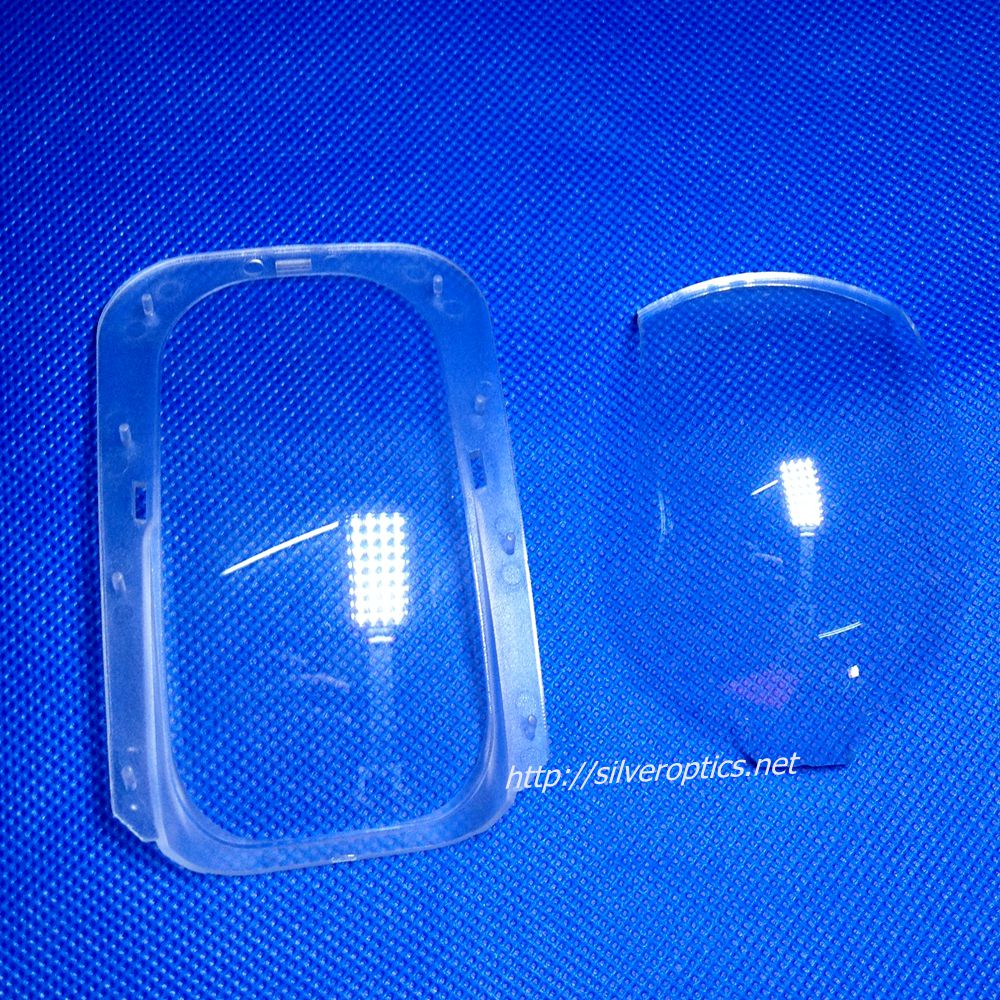 Was sind die Unterschiede zwischen Polymer- und Glaslinsen?
Polymer lenses (also known as plastic optical lenses) and glass lenses are two core optical components widely used in various optical systems. While both serve the fundamental function of manipulating light (refracting, Fokussieren, or dispersing), they differ significantly in terms of material properties, manufacturing processes, performance characteristics, and application scenarios. Below is a detailed breakdown of their key differences:
- Material Properties
Glass lenses are fabricated from high-quality optical glass materials, such as crown glass and flint glass. Their defining material advantages include high transparency, exzellenter Brechungsindex, und stabile optische Leistung. Im Gegensatz dazu, polymer lenses are made from polymer materials like acrylics, polycarbonates, cyclo-olefins (COP/COC), and silicone. These materials are lightweight but generally have lower optical clarity and thermal stability compared to optical glass. Additionally, glass is brittle and prone to shattering, while polymer materials are more flexible and break-resistant.
- Manufacturing Processes
The production of glass lenses relies on sophisticated precision machining processes, primarily grinding and polishing, to achieve the required shape and surface quality. These processes are complex and time-consuming, especially for high-precision optical requirements. On the other hand, polymer lenses are mainly manufactured through injection molding, compression molding, or hot embossing. These techniques enable efficient mass production with consistent replication—even achieving surface roughness below 2 nm—at a significantly lower cost. Moreover, polymer lenses allow for the integration of assembly functions into a single component, simplifying subsequent production steps.
- Performance Characteristics
In terms of optical performance, glass lenses excel in high transparency, stable refractive properties, and resistance to chromatic aberration (especially when combining crown and flint glass). They also have better thermal stability, making them suitable for high-temperature environments. Polymer lenses, while slightly inferior in optical clarity compared to glass, offer unique advantages such as being approximately four times lighter than glass lenses—critical for weight-sensitive applications. They also have superior design flexibility, enabling the creation of complex geometries that are difficult to achieve with brittle glass.
- Application Scenarios
Glass lenses are preferred in scenarios requiring high-precision light control and stable performance, such as scientific instruments (telescopes, microscopes), high-end cameras, laser systems, and industrial optical equipment. Polymer lenses, due to their lightweight, cost-effectiveness, and break resistance, are widely used in consumer electronics (smartphone cameras, displays), Automobilsysteme, medical devices, and lighting products—especially in large-batch production where cost control and practicality are priorities.
- Post-Processing and Durability
Both types of lenses can undergo optical coating to improve performance (z.B., reducing reflection, enhancing transmittance). Allerdings, glass lenses are more resistant to scratches and long-term degradation, while polymer lenses are susceptible to scratches and may degrade over time under harsh environmental conditions—though advances in surface treatment technologies are addressing these limitations.
Zusammenfassend, the choice between polymer and glass lenses depends on the specific requirements of the optical system: glass lenses are ideal for high-precision, stabiler, and harsh-environment applications, while polymer lenses are superior for cost-efficient mass production, lightweight design, and flexible geometry needs.
|(注:文档部分内容可能由 AI 生成)
Kategorie mit Seitenleiste
ANFRAGE SENDEN
Verwandte Produkte

© Silveroptics 2016. Alle Rechte vorbehalten
Bereitgestellt von Silveroptics