

- Optical Molding
- Optical Tooling
- Tooling Videos
- Prism & Filters
- Custom Optical Parts
- Lighting & Illumination
- Medical & Endoscopy
- Optical Applications
- Automotive Optics
- Imaging & Vision
- Optical Capabilities
- Products & Applications
- Resource
- Custom Glass Optics
- Optical Molds
- OPtical Coating
- Consumer Electronics
- Industrial Vision
- Aspheric Lenses
- Spherical Lenses
Polymer vs. Glass Lenses: Compare Performance Before Geometry
Inquiry- Description
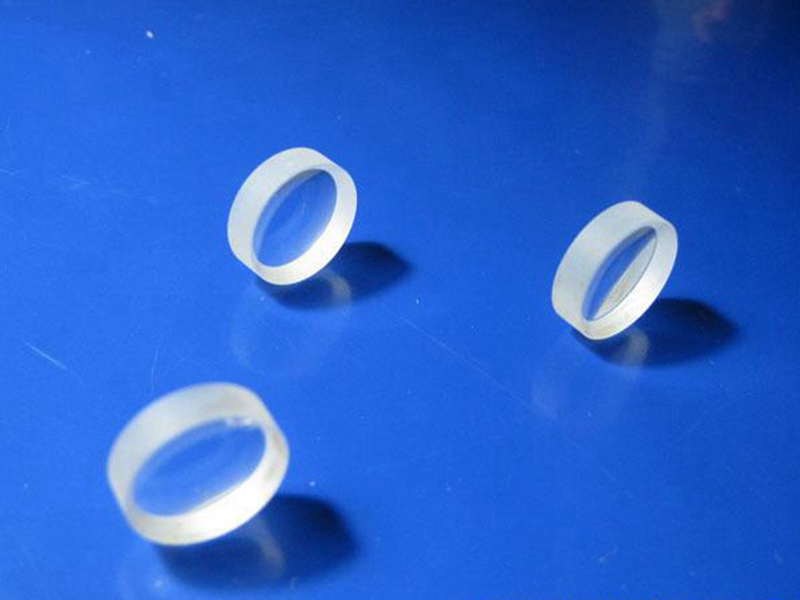
Image: Glass lens elements are one option in a material and manufacturing comparison.
Can a glass lens be replaced with a polymer lens of the same shape? Changing the material changes refractive index and dispersion, so the original geometry may no longer deliver the same focal behavior. A meaningful comparison starts with the required optical function and allows each material route to meet it.
Compare designs that solve the same problem
For imaging, define the working wavelengths, field of view and required image contrast. For illumination, define the light distribution and collection requirement. Then compare candidate prescriptions within the same mechanical envelope and other project constraints.
Glass offers a broad choice of index and dispersion combinations. Polymers offer low density and useful molding options. Neither advantage establishes the result on its own: curvature, thickness, surface form and element alignment contribute to performance. The glass lens introduction explains how these variables work together.
Include the lens and its mount
Temperature can change both material dimensions and refractive index. The mount can also expand, changing spacing or loading the lens. Polymer moisture response adds a grade-dependent consideration, while glass requires attention to brittleness and thermal stress.
Evaluate these effects in the assembly rather than treating a material temperature rating as proof of optical stability. Compare mass using each proposed design and its material density; equal external dimensions are not necessary for equal optical performance.
Manufacturing should be considered at the same time. Polymer molding can integrate positioning features, while glass may be ground and polished or precision molded where suitable. Tooling, finishing and inspection requirements can change the commercial choice.
Use equivalent test conditions
Compare completed parts or assemblies using the same wavelengths, aperture, object distance and environmental conditions. In an imaging application, modulation transfer function measures the ability to preserve contrast at different levels of detail. Assess relevant field positions rather than relying only on center-field sharpness.
For illumination, compare measured light distribution. Surface or wavefront measurements can help explain differences, but should be connected to the intended function.
Record initial performance and changes after the required exposure or mounting steps. Combined with the production assessment for plastic lenses, this evidence supports a material choice that remains valid beyond the first prototype.
Consumer Electronics
SEND INQUIRY
Related Products
© Silveroptics 2026. All rights reserved
Powered by Silveroptics
Service
