Plastic optical molds are widely used across consumer electronics, automotive, medical, industrielle, and AR/VR sectors, with core applications tied to high-precision injection/compression molding for optical components that demand strict surface finish, dimensional accuracy, and light-controlling functions. Below are detailed application examples organized by industry, with mold design and process highlights:
The largest application area, focusing on miniaturization, mass production, and cost-effectiveness.
- Smartphone Camera Lenses
- Mold Type: Multi-cavity (8–16 cavities) ultra-precision injection mold with aspherical cavity design; hot runner + sequential valve gating to avoid flow marks/weld lines.
- Mold Requirements: Cavity surface Ra ≤ 0.001 μm, dimensional tolerance ±1 μm; materials like SUS440C with 58–62 HRC hardness after heat treatment.
- Anwendung: Rear/front camera modules (z.B., 3D sensing, periscope lenses) using PMMA/PC/COP to balance clarity and impact resistance.
- LED Display Light Guide Plates (LGPs)
- Mold Type: Optical film mold with micro-nano dot/pyramid structures on the cavity surface; often single-cavity for large-size LGPs or multi-cavity for small displays.
- Mold Requirements: Micro-structure precision ±5 μm, uniform cooling channels to prevent warpage.
- Anwendung: LCD TVs, monitors, and laptop screens, where the LGP diffuses LED light for uniform backlighting.
- Barcode Scanner Lenses
- Mold Type: Laser collimating lens mold with pinpoint gates for precise beam shaping.
- Mold Requirements: Low birefringence design, surface finish Ra ≤ 0.002 μm to ensure scanning accuracy.
- Anwendung: Supermarket checkout scanners and industrial barcode readers using PC for durability.
Emphasizes high-temperature resistance, impact durability, and strict light distribution standards.
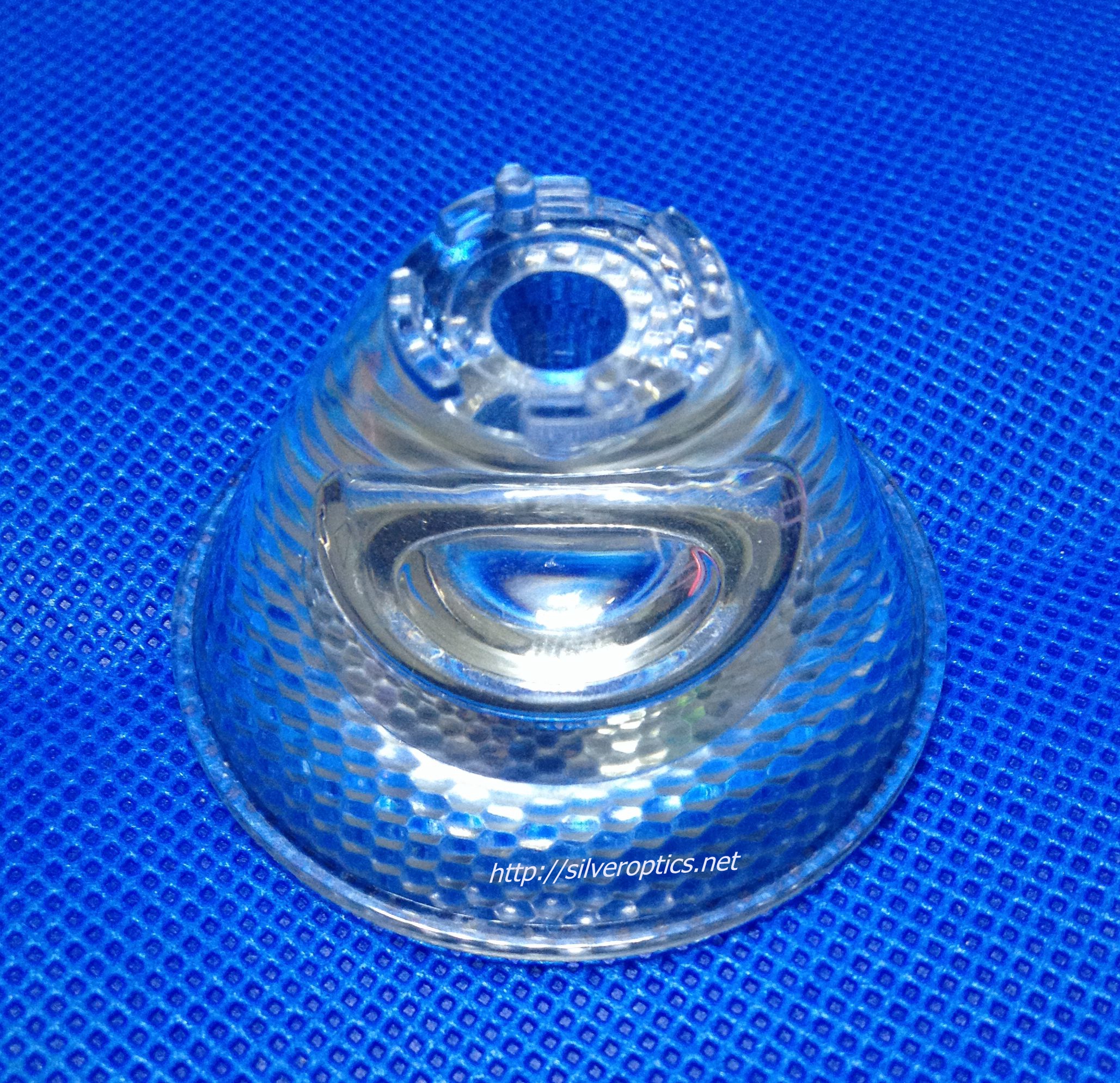
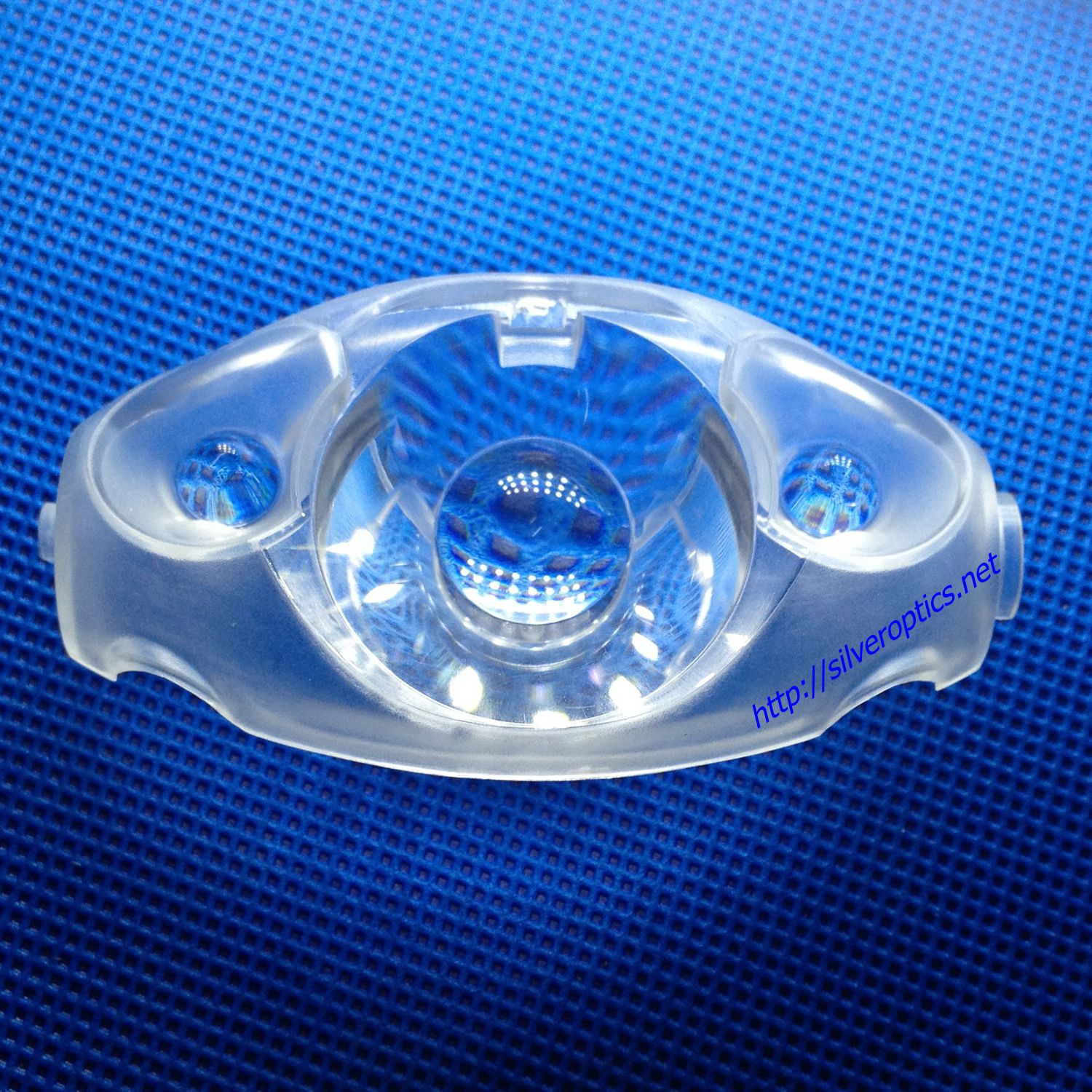
- Automotive Headlight Lenses & TIR Optics
- Mold Type: Large single-cavity compression/injection-compression mold; conformal cooling channels to reduce residual stress.
- Mold Requirements: Cavity surface mirror finish (A0 grade), no parting lines; materials like H13 steel with TiN coating for wear resistance.
- Anwendung: LED headlights, fog lights, and DRLs using PC for heat resistance (up to 125°C) and impact resistance.
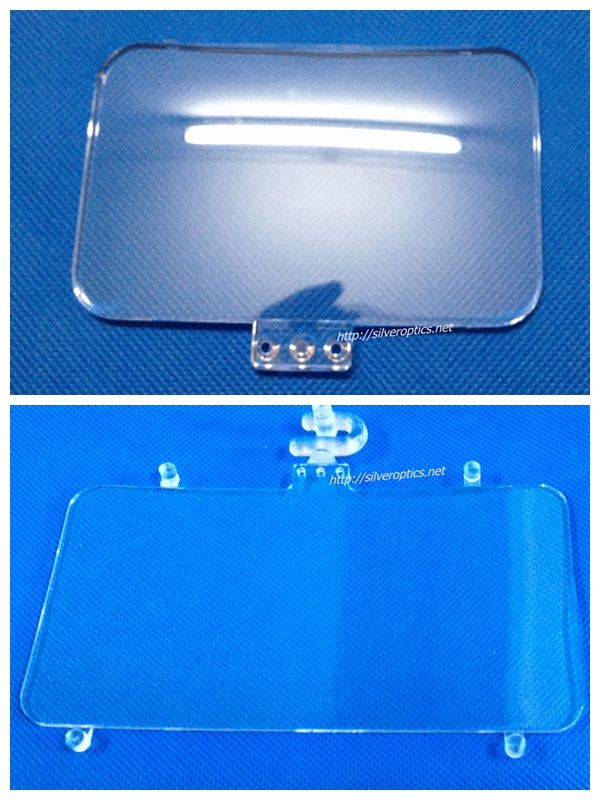
- Automotive HUD Combiners
- Mold Type: Freeform optical mold with diamond-turned aspherical surfaces; multi-axis CNC machining for complex curvature.
- Mold Requirements: Formgenauigkeit PV < 5 μm, Oberflächenrauheit Ra < 0.01 μm to avoid image distortion.
- Anwendung: Windshield-projected HUD systems (z.B., speed, Navigation) using COP for low birefringence.
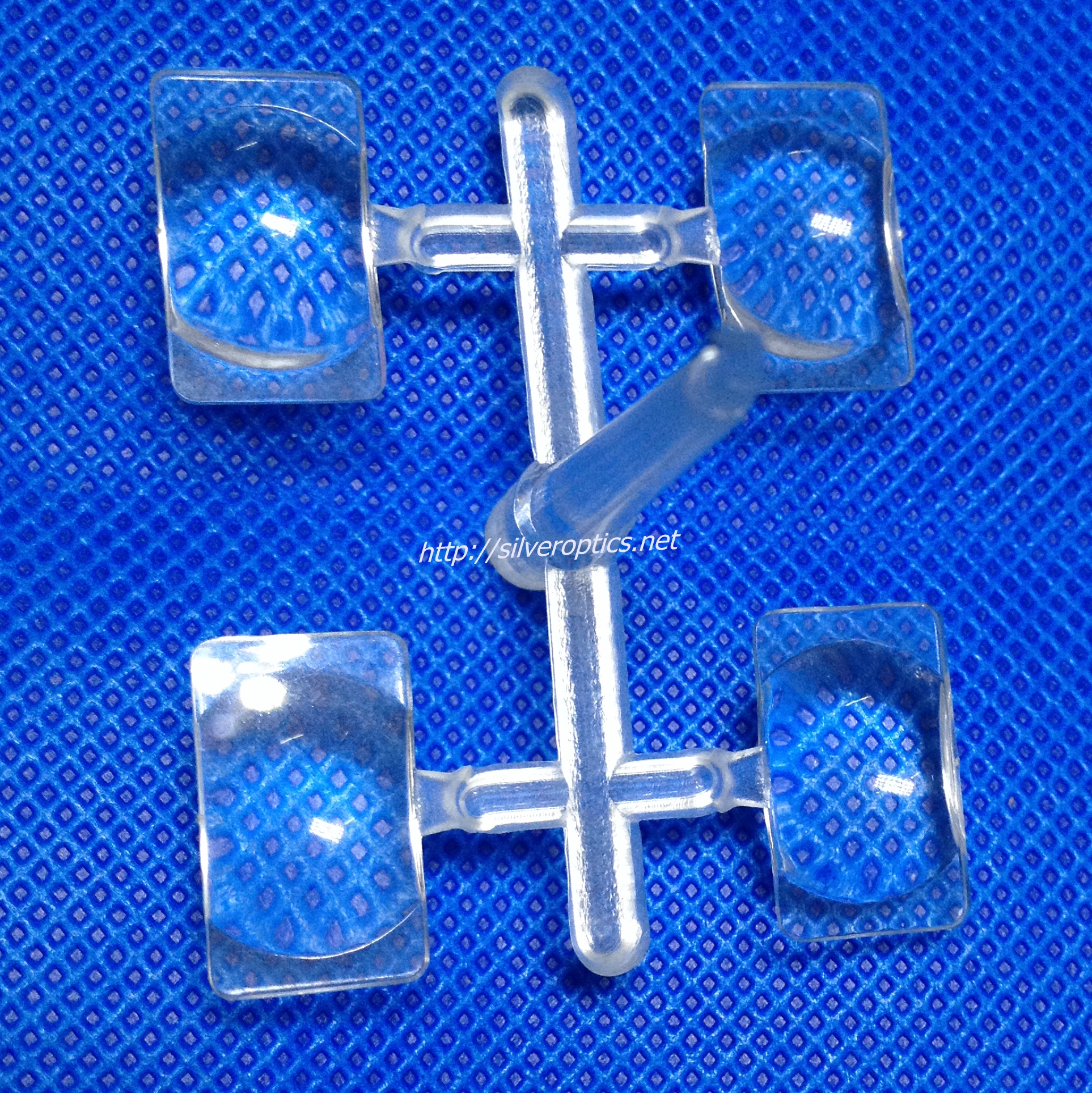
- Thick-Wall Light Guides for Taillights
- Mold Type: Large 双色 (2K) injection mold with side core-pulling for undercuts; A0-grade surface finish on light paths.
- Mold Requirements: No weld lines/shrinkage; cycle time optimization (z.B., 288 s for automotive thick-wall parts).
- Anwendung: Taillight/turn signal light guides using PC for high light transmittance and heat resistance.
Requires biocompatibility, precision, and cleanroom production compatibility.
- Endoscope Lenses
- Mold Type: Micro-optical injection mold with sub-micron cavity machining; soft ejection to prevent surface scratches.
- Mold Requirements: Ra ≤ 0.001 μm, strict dimensional tolerance ±1 μm to ensure clear imaging.
- Anwendung: Laparoscopes/arthroscopes using medical-grade PMMA or cyclic olefin copolymer (COC) for biocompatibility.
- Disposable Diagnostic Optics (z.B., Blood Analyzer Cells)
- Mold Type: Multi-cavity (32–64 cavities) precision injection mold; hot runner to reduce material waste.
- Mold Requirements: Smooth, contamination-free surfaces; compatibility with chemical reagents.
- Anwendung: Point-of-care (POC) devices using COC for optical clarity and chemical resistance.
- Infrarot-Sensorlinsen für medizinische Überwachung
- Mold Type: Optische Sensorform mit spektral passendem Hohlraumdesign; niedrige Doppelbrechung zur Aufrechterhaltung der Signalgenauigkeit.
- Mold Requirements: Kontrollierte Oberflächenebene, Toleranz ±2 μm für Infrarotübertragung.
- Anwendung: Pulsoximeter und Wärmebildgeräte mit PC für IR-Transparenz.
Erfordert extreme Präzision für Laser-/Bildgebungssysteme und leichtes Design für Nahaug-Displays.
- Laser-Kollimationslinsen (Industrie)
- Mold Type: Ultrapräzise Spritzgussform mit asphärischen Profilen; Vakuumentgasung zur Vermeidung von Blasen.
- Mold Requirements: Formgenauigkeit PV < 1 μm, Oberflächenrauheit Ra ≤ 0.001 μm für Strahlqualität.
- Anwendung: Laserschneiden, Schweißen, und 3D-Druck mit COP für geringe thermische Ausdehnung.
- AR/VR-Headset-Linsen
- Mold Type: Freiform-optische Form mit komplexer Krümmung; Diamantdrehen für asphärische Flächen.
- Mold Requirements: Niedrige Doppelbrechung, surface finish Ra ≤ 0.001 μm zur Reduzierung der Augenbelastung.
- Anwendung: Meta Quest, HTC Vive mit PMMA/COP für Leichtgewicht, wide FOV lenses.
- Optical Encoder Disks
- Mold Type: Optical film mold with micro-grating structures; precise alignment of cavity and core to ensure grating pitch accuracy.
- Mold Requirements: Grating pitch tolerance ±1 μm, uniform thickness control.
- Anwendung: Industrial automation and robotics for position feedback using PC for durability.
Focuses on high-temperature stability, radiation resistance, and ultra-precision for critical optical systems.
- Night Vision Goggle Lenses
- Mold Type: Prism/lens mold with strict angle tolerance (±5″); stress-relieved steel to avoid deformation under extreme conditions.
- Mold Requirements: Surface finish Ra ≤ 0.001 μm, dimensional tolerance ±0.5 μm for clear low-light imaging.
- Anwendung: AN/AVS-6 (pilot) and AN/PVS-7 (infantry) night vision goggles using high-impact optical plastics.
- Laser Guided Projectile Optics
- Mold Type: Precision prism mold with diamond grinding for angle accuracy; corrosion-resistant coating for battlefield environments.
- Mold Requirements: Angle tolerance ±3″, high hardness (60–62 HRC) to withstand launch shock.
- Anwendung: “Copperhead” laser-guided artillery rounds using PC for impact resistance.
- Material Selection: Use SUS440C/SKD11/ASP23 for mold cores/cavities; apply TiN/CrN coatings for corrosion resistance.
- Surface Finish: Mechanical polishing → CMP to reach Ra ≤ 0.001 μm; inspect with laser interferometers.
- Process Control: Use Moldflow to optimize cooling channels; adopt injection-compression for thick-wall parts to reduce stress.
- Quality Inspection: Use CMM, optische Profiler, and interferometers to verify dimensions and surface accuracy post-machining/assembly.
These examples reflect how plastic optical molds enable high-performance, cost-effective optical components across industries, with mold design and precision machining being the core of quality control.