Quelles sont les différences entre les lentilles en polymère et en verre?
Enquête- Description
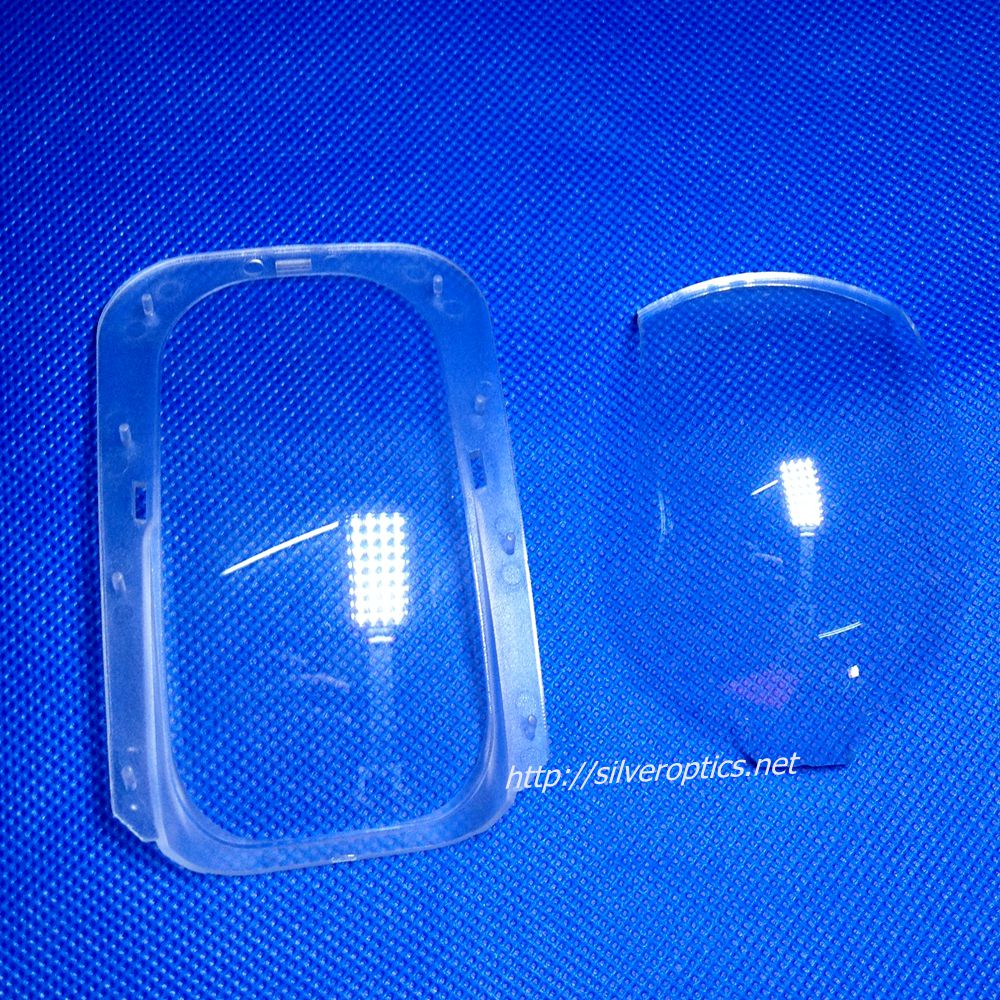 Quelles sont les différences entre les lentilles en polymère et en verre?
Polymer lenses (also known as plastic optical lenses) and glass lenses are two core optical components widely used in various optical systems. While both serve the fundamental function of manipulating light (refracting, la focalisation, or dispersing), they differ significantly in terms of material properties, manufacturing processes, performance characteristics, and application scenarios. Below is a detailed breakdown of their key differences:
- Material Properties
Glass lenses are fabricated from high-quality optical glass materials, such as crown glass and flint glass. Their defining material advantages include high transparency, excellent refractive index, and stable optical performance. In contrast, polymer lenses are made from polymer materials like acrylics, polycarbonates, cyclo-olefins (COP/COC), and silicone. These materials are lightweight but generally have lower optical clarity and thermal stability compared to optical glass. Additionally, glass is brittle and prone to shattering, while polymer materials are more flexible and break-resistant.
- Manufacturing Processes
The production of glass lenses relies on sophisticated precision machining processes, primarily grinding and polishing, to achieve the required shape and surface quality. These processes are complex and time-consuming, especially for high-precision optical requirements. On the other hand, polymer lenses are mainly manufactured through injection molding, compression molding, or hot embossing. These techniques enable efficient mass production with consistent replication—even achieving surface roughness below 2 nm—at a significantly lower cost. Moreover, Les lentilles en polymère permettent l'intégration de fonctions d'assemblage dans un seul composant, simplifiant les étapes de production suivantes.
- Caractéristiques de performance
En termes de performance optique, les lentilles en verre excellent par leur haute transparence, leurs propriétés réfractives stables, et leur résistance à l'aberration chromatique (surtout lorsqu'on combine du verre crown et flint). Elles offrent également une meilleure stabilité thermique, les rendant adaptées aux environnements à haute température. Polymer lenses, tout en étant légèrement inférieures en clarté optique par rapport au verre, elles présentent des avantages uniques tels qu'un poids environ quatre fois inférieur à celui des lentilles en verre — ce qui est crucial pour les applications sensibles au poids. Elles offrent également une flexibilité de conception supérieure, permettant la création de géométries complexes difficiles à réaliser avec du verre fragile.
- Scénarios d'application
Glass lenses are preferred in scenarios requiring high-precision light control and stable performance, such as scientific instruments (telescopes, microscopes), high-end cameras, laser systems, and industrial optical equipment. Polymer lenses, due to their lightweight, cost-effectiveness, and break resistance, are widely used in consumer electronics (smartphone cameras, displays), automotive systems, medical devices, and lighting products—especially in large-batch production where cost control and practicality are priorities.
- Post-Processing and Durability
Both types of lenses can undergo optical coating to improve performance (Par exemple,, reducing reflection, enhancing transmittance). Cependant, glass lenses are more resistant to scratches and long-term degradation, while polymer lenses are susceptible to scratches and may degrade over time under harsh environmental conditions—though advances in surface treatment technologies are addressing these limitations.
En résumé, the choice between polymer and glass lenses depends on the specific requirements of the optical system: glass lenses are ideal for high-precision, partenaire stable, and harsh-environment applications, while polymer lenses are superior for cost-efficient mass production, lightweight design, and flexible geometry needs.
|(注:文档部分内容可能由 AI 生成)
Catégorie avec barre latérale
ENVOYER UNE DEMANDE
Produits connexes

© Silveroptics 2016. Tous droits réservés
Propulsé par Silveroptics