- Products & Applications
-
-

Lens system illustration. Rendered with the highest fidelity to capture all the relflections and refractions as light travels through the various lenses.
-
-
-
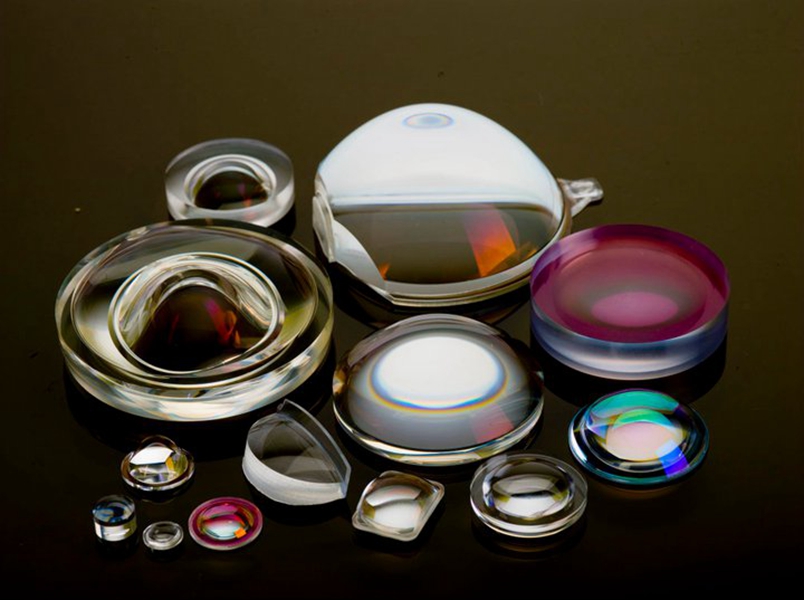
Quality Control Manual for Modern Plastic Optical Injection Molding
1. Scope and Purpose
This manual specifies the quality control (QC) requirements, testing equipment, and inspection methods for the entire production process of plastic optical components (e.g., lenses, light guides) manufactured by injection molding. Its purpose is to ensure consistent optical performance, dimensional accuracy, and surface quality of final products, meeting customer and industry standards.
2. Quality Control Process & Key Requirements
2.1 Pre-Production Quality Control
• Raw Material Inspection: Verify the conformity of optical plastic materials (PMMA, PC, COP, COC, etc.) with technical specifications, including purity, moisture content, melt flow rate (MFR), and optical transmittance. Reject materials with impurities or inconsistent properties.
• Mold Qualification: Inspect mold surface finish, dimensional accuracy of cavities/gates, and cooling system uniformity. Ensure mold surface roughness meets ≤2 nm for optical components.
2.2 In-Production Quality Control
• Process Parameter Monitoring: Real-time monitor injection molding parameters (mold temperature, melt temperature, injection pressure/speed, holding pressure/time, cooling time) to avoid molded-in stress and optical defects (e.g., birefringence, warpage).
• In-Process Sampling Inspection: Conduct periodic sampling of semi-finished products to check preliminary surface quality (no scratches, bubbles, or flow marks) and key dimensions.
2.3 Post-Production Quality Control
• Final Dimensional Inspection: Verify critical dimensions (e.g., lens curvature, thickness, diameter) and geometric tolerance of finished products.
• Optical Performance Testing: Evaluate core optical properties to ensure compliance with specifications.
• Surface Quality Inspection: Comprehensive check for surface defects affecting optical performance.
3. Testing Equipment & Inspection Methods
|
QC Stage
|
Inspection Items
|
Testing Equipment
|
Inspection Methods & Standards
|
|---|---|---|---|
|
Pre-Production
|
Raw material transmittance, moisture content, MFR
|
UV-Vis spectrophotometer, moisture analyzer, melt flow index tester
|
• Transmittance: Test at 400–760 nm, ≥90% for PMMA/PC; • Moisture content: ≤0.02% (Karl Fischer method); • MFR: Comply with material supplier’s specs
|
|
Pre-Production
|
Mold surface roughness, dimensional accuracy
|
Atomic force microscope (AFM), coordinate measuring machine (CMM)
|
• Surface roughness: ≤2 nm (AFM scan); • Dimensional accuracy: ±0.001 mm (CMM measurement)
|
|
In-Production
|
Injection process parameters
|
Process monitoring system, temperature sensors, pressure transducers
|
Real-time data logging; deviation ≤±5% from set parameters; alarm for out-of-spec values
|
|
In-Production/Final
|
Surface defects (scratches, bubbles, flow marks)
|
High-resolution optical microscope, automated visual inspection (AVI) system
|
• Microscope: 50–100x magnification; • AVI: 100% inspection, defect size ≤0.01 mm rejected
|
|
Final
|
Dimensional accuracy (curvature, thickness, diameter)
|
Precision CMM, laser interferometer, thickness gauge
|
• Dimensional tolerance: ±0.002 mm; • Curvature: Deviation ≤0.001 mm (laser interferometry)
|
|
Final
|
Optical performance (transmittance, birefringence, light distribution)
|
UV-Vis spectrophotometer, polarimeter, goniophotometer
|
• Transmittance: ≥90% (400–760 nm); • Birefringence: ≤5 nm/cm; • Light distribution: Comply with design specs
|
|
Final
|
Coating quality (if applicable: HC/AR coating)
|
Abrasion tester, reflectometer
|
• Abrasion resistance: ≥6H pencil hardness; • Reflectance: ≤1% (AR coating)
|
4. Quality Assurance Measures
• Equipment Calibration: All testing equipment shall be calibrated annually by authorized institutions to ensure measurement accuracy, with calibration records retained.
• Personnel Training: QC operators must receive professional training on equipment operation, inspection standards, and defect identification, passing qualification tests before taking up posts.
• Data Traceability: Establish a complete quality record system, including raw material certificates, process parameter logs, inspection reports, and non-conforming product handling records, ensuring full traceability of each batch.
• Non-Conforming Product Handling: Non-conforming products shall be marked, isolated, and reviewed. Disposition (rework, scrap, re-inspection) shall be approved by the quality department, with preventive measures formulated to avoid recurrence.
5. Continuous Improvement
Regularly analyze quality data (defect rate, customer complaints, process stability) to identify improvement opportunities. Conduct internal audits quarterly to verify the effectiveness of this manual, updating it in accordance with industry standards, customer requirements, and technological advancements.

Precision Glass & Plastic Optics Manufacturing.
Your one-stop solution for advanced optical engineering.
© Silveroptics 2026. All rights reserved
Powered by Silveroptics