
Custom Glass Optics Manufacturing
Bring your custom lens, prism, window, filter or mirror project to Silver Optics. We review the optical design, glass selection, surface finish and coating requirements to define a project-specific manufacturing scope.
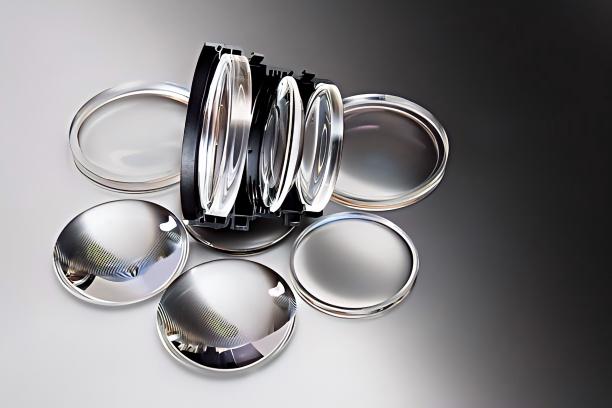
From optical design to a manufacturing brief
Custom glass optics connect an optical function with a manufacturable component. Define the application, wavelength range and mechanical envelope first. Material selection, grinding and polishing requirements, coatings and inspection can then be reviewed together. The process route and achievable specifications are confirmed for each project.
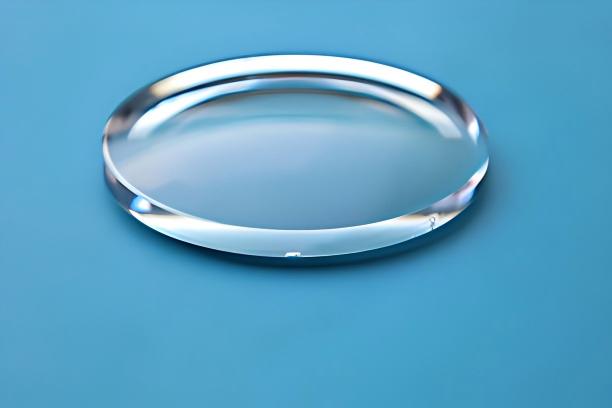
Review the drawing and its purpose
For imaging, illumination or beam control, start with the optical prescription and the role of each surface. Include curvature or the full surface definition, clear aperture, thickness and alignment references. For a spherical, aspheric or other specified geometry, identify the requirements that drive system performance.
- Application, wavelength range and optical function
- Surface prescription and clear aperture
- Critical dimensions and alignment references
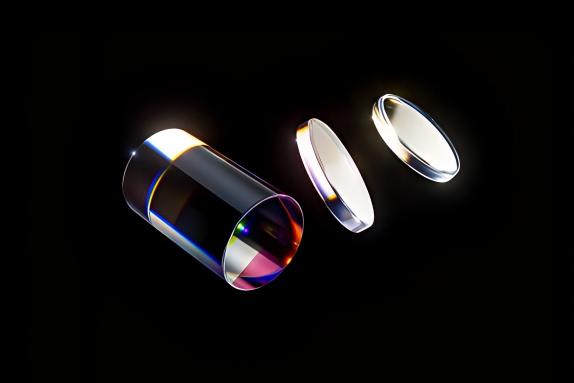
Match the glass to the optical system
Use a specific glass grade wherever the design requires one. Crown and flint glass families, BK7-type glass and fused silica are useful starting points for a material discussion. Review the required refractive index, dispersion, transmission and operating conditions; availability and suitability require confirmation. Any substitution needs design review and approval.
- Specified glass grade and optical properties
- Transmission band and service conditions
- Approved alternatives and material records

Review the finished optical surface
Connect the required surface form and surface quality to the proposed grinding and polishing route. Where coatings are needed, identify each treated face and specify the anti-reflection, reflection or filtering function, wavelength range and working angle. Include mounting, edge and handling requirements in the same drawing review.
- Grinding and polishing requirements
- Coated faces, spectral targets and incidence angle
- Mounting interfaces, edge finish and handling
Component families for your custom project
Use these product families to structure your inquiry. Material, geometry, coating and supply scope are reviewed against your drawing; the examples are not a stock or capability guarantee.
Optical lenses
Define the prescribed surfaces, center thickness, diameter and clear aperture for focusing, imaging or beam shaping. Include centration and mounting references.
Prisms and mirrors
For beam redirection, specify the prism geometry or mirror substrate, working orientation, optical faces and any required reflective coating.
Windows and filters
Specify the aperture, thickness and surface relationships. For a filter, include the wavelength bands to transmit or reject and the measurement conditions.
From the first drawing to an agreed next step.
- 01
Review the drawing
Resolve the optical prescription, material grade, critical tolerances, quantity and sample requirements.
- 02
Plan shaping and finishing
Agree a suitable manufacturing route, including grinding and polishing requirements, with the inspection approach.
- 03
Define coating and evaluation
Confirm any coating scope, sample stage, spectral test conditions and acceptance records.
- 04
Approve the delivery scope
Release the agreed drawing revision, inspection documentation, protective packaging and delivery schedule.
Agree the evidence for acceptance
Inspection should answer the questions that matter to your optical system. Define the acceptance limits, measurement conditions and reporting requirements before releasing the final drawing.
Geometry and alignment
Identify critical dimensions, thickness, centration and surface-angle relationships. Reference the datums and clear aperture shown on the drawing.
Surface form and quality
Specify surface form separately from scratches, digs and other surface defects. Agree the applicable drawing standard, evaluation area and measurement method.
Material and spectral performance
Agree the required material documentation and, for coated optics or filters, the transmission or reflection evidence under defined test conditions.
Before your
project begins.
What should I send for a custom glass optic?
Send the current drawing or optical prescription, intended application, wavelength range, material preference, quantity and schedule. Mark any requirements still under development.
Can I request lenses, prisms, windows, filters or mirrors?
Include the required component family and geometry in your inquiry. Silver Optics reviews the material, manufacturing route, coating and delivery scope for the individual project.
How should I choose the glass?
Specify the grade used in your optical design when known. Otherwise provide the required optical properties and operating conditions so suitable options can be reviewed. Substitutions require approval.
Can grinding, polishing and coating be reviewed together?
Yes. Include the finished surface requirements and coated-face details in the same brief. The proposed process sequence, compatibility and acceptance plan are confirmed after technical review.
What tolerances and production quantities are available?
These depend on the material, geometry and inspection requirements. Send your critical tolerances and expected quantities for review; no blanket dimensional range or tolerance is assumed.
Discuss your custom glass optics project
Send the current specification and mark any requirements still to be resolved. Materials, process, tolerances and delivery scope are confirmed after technical review.
- Drawing revision, surface prescription and clear aperture
- Glass grade or required optical properties
- Coated faces, wavelength range and operating conditions
- Critical tolerances, inspection methods and records
- Prototype and production quantities, packaging and schedule
