
- Оптическое формование
- Оптическое оснащение
- Видео об инструментах
- Призма & Фильтры
- Индивидуальные оптические детали
- Освещение & Интенсивность света
- Медицинское & Эндоскопия
- Оптические приложения
- Автомобильная оптика
- Изображение & Зрение
- Оптические возможности
- Продукция & Применения
- Ресурс
- Индивидуальная стеклянная оптика
- Оптические формы
- Оптическое покрытие
- Потребительская электроника
- Промышленное зрение
- Асферические линзы
- Сферические линзы
Dispersive Prism RFQ: Set the Wavelength and Reference Angle
Запрос- Описание
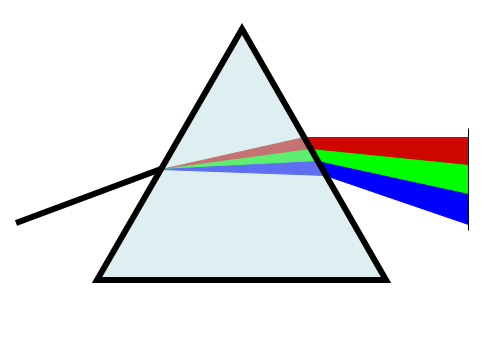
A dispersive prism can pass a drawing inspection and still put a spectral band in the wrong place on a detector. The prism angle is a geometry specification. Beam deviation is a measurement with an input direction, a wavelength and a reference ray. Put both sets of requirements in the request for quotation rather than asking for a single unspecified “prism angle.”
Define the Central Ray Before the Band Edges
Mark the entrance face, exit face and orientation of the prism apex in the assembly. Give the incident direction relative to a named face normal or mechanical datum, and specify the target deviation at a reference wavelength. State whether a second wavelength is needed to determine angular separation or whether a small set of wavelengths must meet individual deviation limits.
The University of Arizona’s optics lab guide explains why both prism geometry and index variation with wavelength matter. A minimum-deviation test has a particular alignment condition. If the prism is used at a fixed angle in the instrument, do not substitute the minimum-deviation result for a measurement in that fixed orientation unless the two conditions are shown to match.
Make the Mechanical Reference Reproducible
Identify the mounting face and the permitted clocking error. Mark the clear apertures on both working faces and keep bevels or clips out of the specified illuminated area. Identify which surfaces need coating and give the wavelength band, incidence and polarization conditions where relevant. The custom glass optics service overview gives context for reviewing substrate, geometry and coatings together.
Agree What the First-Article Report Will Show
- Drawing revision and orientation sketch with the entrance and exit identified.
- Input wavelength, beam angle and illuminated footprint for each measurement.
- Deviation at the reference wavelength and measured separation or deviations at the agreed band points.
- Fixture reference, sign convention and whether the result is angular or converted to detector position.
If acceptance is specified on a detector rather than in angles, give the downstream optical configuration or detector plane. A displacement on one bench is not automatically transferable to a different working distance or relay system.
Use the project inquiry page to start the discussion and agree how to share technical drawings separately.
Ресурс, Блоги
ОТПРАВИТЬ ЗАПРОС
Сопутствующие товары
© Silveroptics 2026. Все права защищены
Руководствовался Silveroptics
