Infrared lenses are optical components operating in the infrared spectral band (wavelength typically 0.75 μm–1000 μm). The selection of their materials must meet core requirements such as high infrared transmittance, low dispersion, good machinability, and environmental stability adapted to the application scenarios. Below is a detailed description of the mainstream materials and typical application scenarios of infrared lenses:
- Core Materials of Infrared Lenses
Infrared materials vary significantly in transmission band, refractive index, hardness, and cost, and should be selected based on the wavelength range and operating environment of specific applications.
- Crystalline Materials (High Transmittance, Low Dispersion, Suitable for High-Precision Infrared Optical Systems)
- Germanium (Ge)
- Transmission Band: 2–16 μm
- Characteristics: High refractive index (n≈4.0), excellent infrared transmittance, good thermal shock resistance, but opaque in the visible light band, medium hardness, and easy to process.
- Limitations: Free carrier absorption occurs at high temperatures (>100°C), resulting in decreased transmittance.
- Silicon (Si)
- Transmission Band: 1.2–8 μm
- Characteristics: Moderate refractive index (n≈3.4), low density, high mechanical strength, wear resistance, lower cost than germanium, and adjustable optical properties through doping.
- Advantages: Suitable for manufacturing large-aperture infrared lenses and commonly used in mid-infrared band imaging systems.
- Zinc Sulfide (ZnS)
- Transmission Band: 0.35–14 μm
- Characteristics: High transmittance from visible light to mid-infrared band, stable refractive index (n≈2.2), high hardness, corrosion resistance, radiation resistance, and suitable for harsh environments.
- Classification: Divided into polycrystalline ZnS(low cost, suitable for civilian use) and single-crystal ZnS (high precision, suitable for military and aerospace applications).
- Zinc Selenide (ZnSe)
- Transmission Band: 0.5–22 μm
- Characteristics: Extremely wide infrared transmission range, good refractive index uniformity, and extremely low optical loss, making it an ideal window material for high-power infrared lasers.
- Limitations: Soft texture, easy to scratch, and high cost.
- Calcium Fluoride (CaF₂)
- Transmission Band: 0.13–9 μm
- Characteristics: Low refractive index (n≈1.4), extremely low dispersion, suitable for manufacturing infrared achromatic lenses, and can transmit ultraviolet bands.
- Limitations: Low mechanical strength, easy to deliquesce, and not impact-resistant.
- Glass Materials (Low Cost, Easy Molding, Suitable for Civilian Infrared Systems)
- Infrared Optical Glass
- Transmission Band: 1–5 μm
- Characteristics: Most compositions are chalcogenide glasses (such as As-S, As-Se systems), with much lower cost than crystalline materials, and can be mass-produced by mold pressing, suitable for consumer-grade infrared products.
- Limitations: Narrow transmission band and poor high-temperature stability.
- Plastic Materials (Lightweight, Low Cost, Suitable for Mass-Produced Civilian Products)
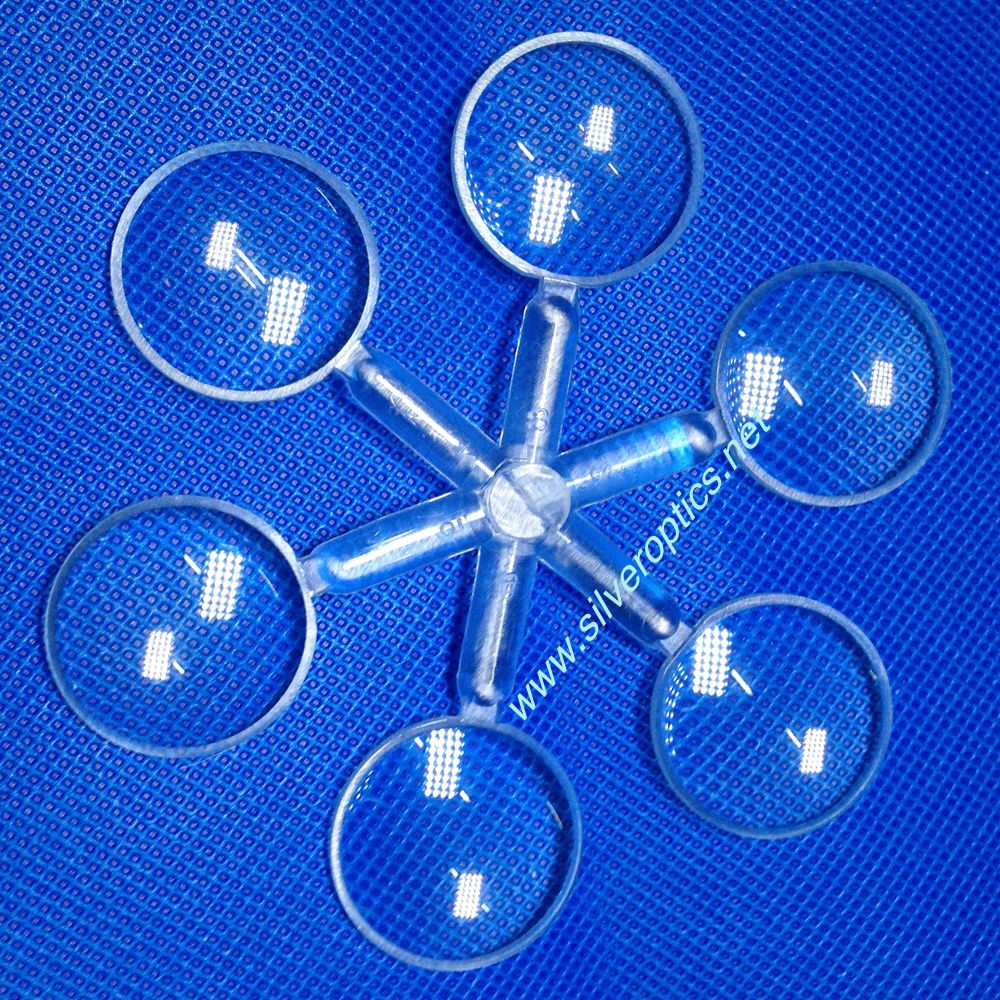
- Polymethyl Methacrylate (PMMA)
- Transmission Band: 1–2.8 μm
- Characteristics: Low cost, easy to injection mold, lightweight, suitable for low-precision optical systems in the near-infrared band.
- Cycloolefin Polymer (COP)
- Transmission Band: 1–4 μm
- Characteristics: Low birefringence, high transmittance, and better dimensional stability than PMMA, suitable for precision near-infrared optical components.
- Advantages
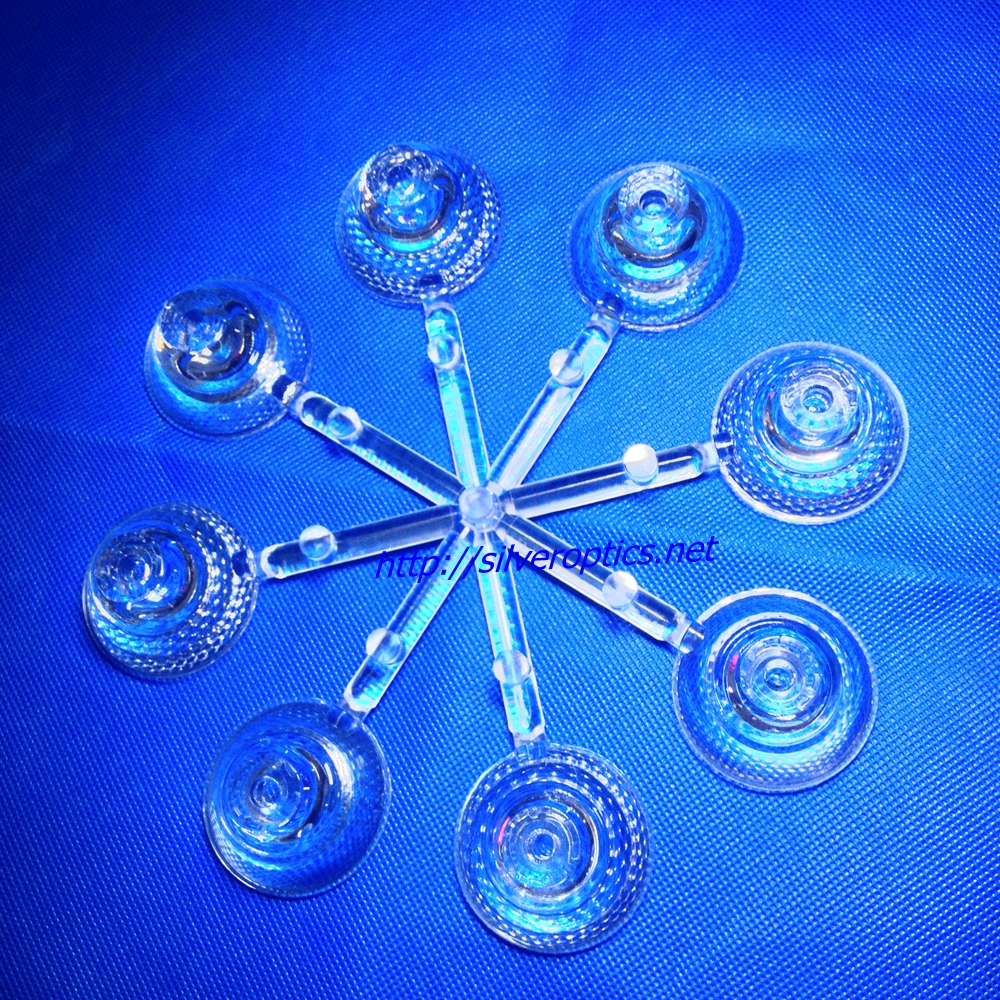
Can achieve complex curved surface molding, adapt to the mass production needs of plastic injection-molded lenses, especially suitable for low-cost scenarios such as household and automotive use.
- Typical Application Scenarios of Infrared Lenses
The applications of infrared lenses cover multiple fields such as civilian use, industry, military, and medical care. The core is to use the thermal radiation or transmission characteristics of the infrared band to achieve functions such as imaging, temperature measurement, and distance measurement.
- Security Monitoring and Night Vision Systems
- Applications: Infrared thermal imaging cameras, night vision devices, security drones.
- Material Selection: Polycrystalline ZnS, silicon, infrared glass (low cost, high cost performance).
- Principle: Images are formed by receiving the infrared thermal radiation of objects, which can clearly identify targets in harsh environments such as no light, fog, and rain.
- Automotive Industry
- Applications: Vehicle-mounted infrared night vision systems, driver fatigue monitoring, autonomous driving LiDAR (Light Detection and Ranging).
- Material Selection: Silicon, ZnS, plastic infrared materials (such as COP, suitable for lightweight and mass injection molding).
- Advantages: Night vision systems can identify pedestrians and obstacles within 200–300 m ahead, improving driving safety at night; LiDAR lenses need to meet the requirements of high transmittance and vibration resistance.
- Industrial Temperature Measurement and Detection
- Applications: Infrared thermometers, industrial thermal imagers, weld inspection, power equipment fault diagnosis.
- Material Selection: Germanium, silicon (high transmittance in the mid-infrared band, suitable for the temperature measurement band of 8–14 μm).
- Principle: Calculate temperature by detecting the intensity of infrared radiation of objects, which can realize non-contact and long-distance temperature measurement, suitable for high-temperature, high-pressure, and high-risk industrial environments.
- Medical Diagnosis
- Applications: Medical infrared thermal imagers, laser surgical equipment, infrared spectrometers.
- Material Selection: ZnSe (high-power laser transmission), calcium fluoride (low dispersion, suitable for high-precision diagnosis).
- Scenarios: Infrared thermal imagers can detect the temperature distribution of the human body surface to assist in the diagnosis of inflammation, tumors and other diseases; laser surgical lenses need to withstand high-power laser irradiation without loss.
- Military and Aerospace
- Applications: Missile seekers, infrared reconnaissance satellites, airborne infrared early warning systems.
- Material Selection: Single-crystal ZnS, ZnSe, germanium (high and low temperature resistance, radiation resistance, high transmittance).
- Requirements: Need to maintain stable optical performance in extreme environments (-50°C–150°C, strong vibration, strong radiation).
- Consumer Electronics and Smart Home
- Applications: Infrared remote controls, household planetariums (infrared starry sky projection), smart door lock infrared sensing.
- Material Selection: Plastic infrared materials (PMMA, COP), infrared glass (low cost, easy to mass produce).
- Adaptability: Plastic infrared lenses can realize complex curved surface design through injection molding process, perfectly matching the miniaturization and personalization needs of products such as household planetariums.
III. Matching Principles Between Materials and Applications
- Wavelength Matching: Choose plastic or silicon for near-infrared (0.75–2 μm); germanium or ZnS for mid-infrared (2–6 μm); ZnSe or calcium fluoride for far-infrared (6–22 μm).
- Cost Matching: Choose plastic or infrared glass for civilian consumer-grade products; crystalline materials for industrial and military-grade products.
- Environment Matching: Choose ZnS or single-crystal germanium for harsh environments (high temperature, corrosion, radiation); plastic or silicon for conventional environments.