


- OPtical Coating
- Optical Molding
- Optical Tooling
- Tooling Videos
- Prism & Filters
- Custom Optical Parts
- Lighting & Illumination
- Medical & Endoscopy
- Optical Applications
- Automotive Optics
- Imaging & Vision
- Optical Capabilities
- Products & Applications
- Resource
- Custom Glass Optics
- Optical Molds
- Consumer Electronics
- Industrial Vision
- Aspheric Lenses
- Spherical Lenses
Optical Plastic Properties: Why Clarity Is Only the Starting Point
Inquiry- Description
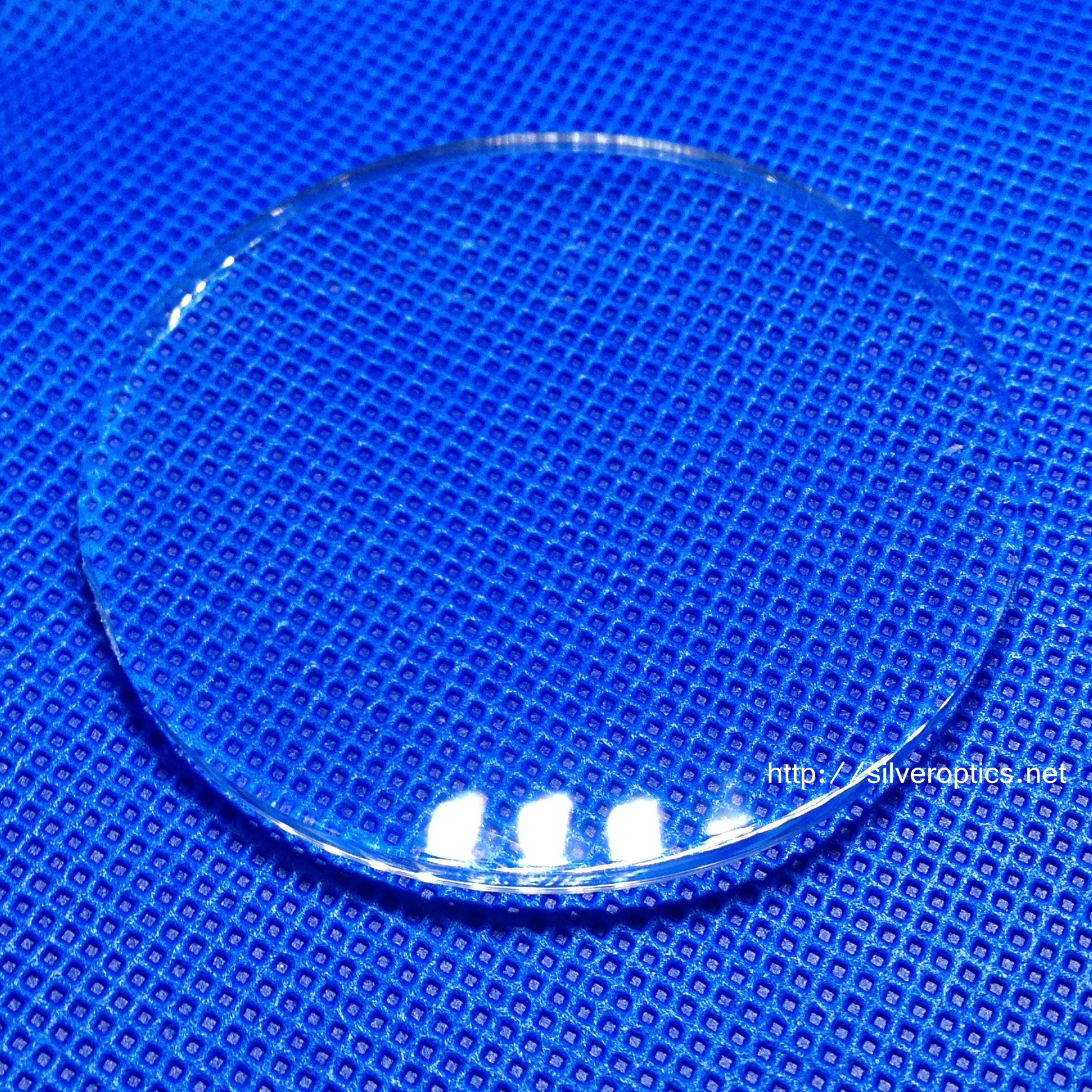
Image: Clear circular optical component on a textured background.
Why can a transparent plastic part pass a visual inspection yet perform poorly in an optical system? Clarity describes only part of the requirement. A lens must transmit the working wavelengths and direct them correctly, while retaining that behavior after molding and assembly.
Separate transmission from optical control
A material that looks clear in room light may absorb more strongly at the operating wavelength. Transmission also depends on the distance light travels through the material. Compare spectral data at a relevant thickness, and distinguish absorption within the material from reflection at its surfaces.
Refractive index determines how light bends at a surface. Dispersion describes how that index changes with wavelength, which can make different colors focus at different positions. High transmission therefore does not establish image quality. The optical prescription must use data for the selected grade, rather than a generic plastic family.
Account for stress and temperature
Stress can make the refractive behavior depend on polarization, an effect called birefringence. Material choice and processing both influence this response. A low-birefringence resin does not remove the need to examine the molded part or the effect of its mounting loads.
Temperature creates another route to optical change: dimensions and refractive index can both vary, shifting focus or beam shape without visible softening. Moisture response and chemical exposure also depend on the grade. The material and process overview explains the main polymer options.
Inspect the effect that matters
Use spectral transmission measurements to assess wavelength-dependent loss. Where polarization matters, use a suitable birefringence or retardance measurement; a crossed-polarizer view can reveal patterns but should not replace a specified quantitative test.
Then check the finished component’s function. An imaging test can reveal contrast or focus changes, while an illumination test can show altered light distribution. Comparing free and mounted parts helps isolate assembly effects. Measurements before and after relevant environmental exposure show whether the initial performance is retained.
The plastic lens validation guide connects these material effects to practical qualification. Record the grade, part geometry and test conditions with the results so that changes can be traced.
Consumer Electronics
SEND INQUIRY
Related Products
© Silveroptics 2026. All rights reserved
Powered by Silveroptics
Service
