


- Tooling Videos
- Prism & Filters
- Custom Optical Parts
- Lighting & Illumination
- Medical & Endoscopy
- Optical Applications
- Automotive Optics
- Imaging & Vision
- Optical Capabilities
- Products & Applications
- Resource
- Custom Glass Optics
- Optical Molds
- OPtical Coating
- Optical Molding
- Optical Tooling
- Consumer Electronics
- Industrial Vision
- Aspheric Lenses
- Spherical Lenses
Round Optical Elements: Defining the Aperture and Mount
Inquiry- Description
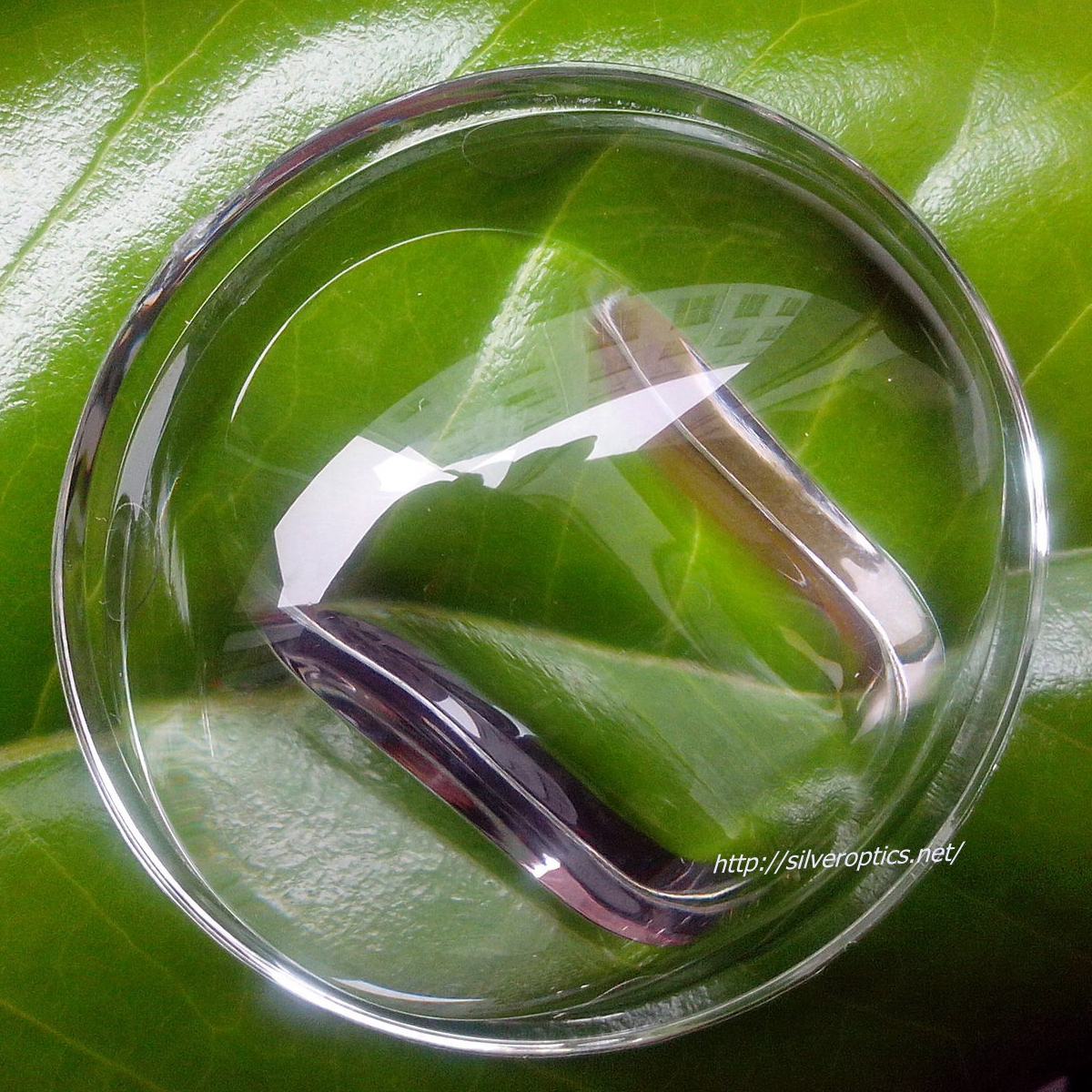
Image: Clear round optical element photographed on a green surface; the image is a geometry reference.
A round optical element can look simple while requiring several independent specifications. The useful optical area, surrounding edge and mounting interface each answer a different question. The clear round element pictured here provides a geometry reference; its material and optical prescription must be established from project documentation.
Distinguish the aperture from the outside diameter
Define the clear aperture over which the optical requirements apply. Then specify the outside diameter and edge geometry needed by the holder. A diameter check establishes mechanical fit, while optical alignment requires its own acceptance criteria.
Identify the reference surface, intended orientation and any allowable edge-contact region. Include the holder drawing in the review so the retention method and usable aperture can be evaluated together. Mark handling areas that keep contact away from the specified optical surfaces.
Select the material and manufacturing route
Supply the surface prescription and thickness requirements before selecting a material. Compare candidate materials against the intended wavelength range, environment and assembly conditions. Record which material data the optical design uses so a substitution triggers a deliberate review.
If a molded-polymer route is proposed, include the thickness distribution, gate location and cooling approach in the feasibility discussion. These decisions should follow the actual section geometry rather than the apparent size or clarity of the photograph.
Verify surfaces and mounting separately
Agree how surface form, visible defects and dimensional fit will be inspected. Use an appropriate profile or surface measurement to assess the specified geometry, and record the alignment method used to compare it with the design.
Inspect representative samples before and after installation in the intended holder. If the measured optical result changes, document the seating and retention conditions before altering the optical prescription. This comparison creates evidence for the next investigation rather than assuming a manufacturing cause.
Prepare the round-optic inquiry
Include the optical drawing, clear aperture, holder interface, material requirements, acceptance tests and quantities in your project inquiry. A reference photograph can supplement these details, but cannot replace them.
Consumer Electronics
SEND INQUIRY
Related Products
© Silveroptics 2026. All rights reserved
Powered by Silveroptics
Service
