
- Custom Glass Optics
- Optical Molds
- OPtical Coating
- Optical Molding
- Optical Tooling
- Tooling Videos
- Prism & Filters
- Custom Optical Parts
- Lighting & Illumination
- Medical & Endoscopy
- Optical Applications
- Automotive Optics
- Imaging & Vision
- Optical Capabilities
- Products & Applications
- Resource
- Consumer Electronics
- Industrial Vision
- Aspheric Lenses
- Spherical Lenses
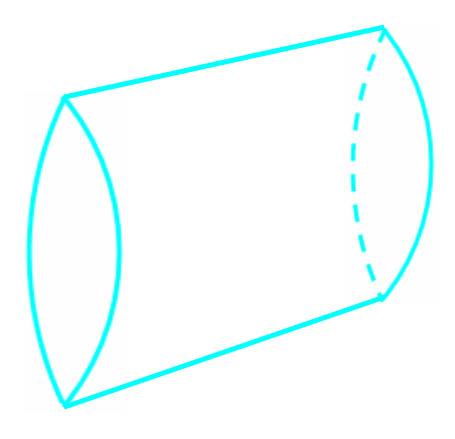
Cylindrical Lens RFQ: Define the Line at the Working Plane
Inquiry- Description
A cylindrical lens can have the specified focal length and still produce a line that is too wide or rotated in the machine. The drawing defines the optic; the quotation also needs to define the line seen by the instrument. That means agreeing on the illumination, the mounting reference and the plane at which the line is evaluated.
Mark the Powered Direction on the Drawing
Show the direction of curvature, the intended optical axis and the mechanical edge used to clock the element. Name the surface facing the source. A cylindrical surface changes the beam in one transverse direction; a rotated mount turns that direction in the system. If line angle matters, specify it against a fixture datum and say how the lens will be seated.
Specify the Line in the Actual Setup
Give the wavelength, incident beam size and shape, and whether the light reaching the optic is collimated or already converging. Define the working plane from a physical surface or an agreed assembly datum.
State whether width is measured using full width at half maximum or a different threshold. Give the usable length over which width and straightness matter; include intensity uniformity only if needed for the application and define its measurement region. Different profiles can produce a different apparent end point even when the same lens is used. Coherent’s comparison of cylindrical and Powell line optics explains why a simple cylindrical lens fed by a Gaussian beam need not give uniform illumination along the line.
Keep Component and Assembly Acceptance Separate
- For the component, call out aperture, focal length at the specified wavelength, clear surfaces and the reference edge.
- For the bench check, record illumination, mount orientation and distance to the target plane.
- For the projected line, report width and orientation at agreed positions, and identify whether the sample was mounted in the customer’s fixture or a reference fixture.
The glass optics service overview provides context for an early substrate and geometry review. Use the actual system or agreed reference setup for acceptance where alignment matters; a catalog focal length alone does not establish the resulting line.
Use the project inquiry page to start the discussion and agree how to share technical drawings separately.
Resource, Blogs
SEND INQUIRY
Related Products
© Silveroptics 2026. All rights reserved
Powered by Silveroptics
Service
